Showing posts with label rewriting. Show all posts

Wednesday, November 20, 2013

UZS-2017 (A Zombie Short Screenplay), Part 2

Back in October last year I wrote about the creation of a zombie short film script in response to the flak I was copping for voicing my ambivalenc-- okay, I hate the damn things.

Subsequently a director came on board and we had two or three meetings and a second draft was written based on his notes. To be honest though we were working at cross purposes with different intentions for the story. He wanted a more traditional "fan pleasing" zombie film whereas I, well, did I mention? I hate the damn things.

The last meeting we had I was in the middle of intensive rewrites for Turbulence with Script Lab looming. So in fairness to the director my head was in a different place and I was struggling to understand his comments on the second draft. I left that meeting suggesting he take a pass at the script. In hindsight a mistake and something I normally never do but I simply didn't have enough RAM in my head to process (or understand) what he wanted at that time. I suspect, however, all the extra brain cells in the world wouldn't have mattered as he was nudging it down a path I wasn't really interested in.

A new draft never materialised from the director (nor myself) so it sat in the back of my brain and in a folder on my computer.

Until, impulsively, I submitted it for a one day workshop via the Film and Television Institute. What the hell, right? It's sitting there and I actually like it a lot. It also attracted interest from that award winning director and another had enquired about it so I figured it must have had some sort of legs.

I wrote the application in about 45 minutes flat. I'd finished the pilot script for the web series and was in a writing mood. I let it come tumbling out. Didn't self-censor or edit. Kind of a devil-may-care attitude because what did I have to lose?

I started it this way...

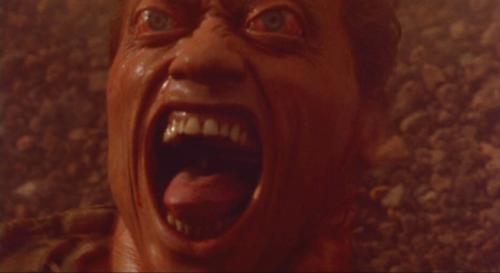
Let me say this up front. I hate zombie films. I don’t understand why everyone under a certain age wants to make ‘em. I expressed this at a screening at the FTI last year to discover people over a certain age want to make them as well. One, a talented cinematographer, turned a picture of me into a zombie! I was mocked mercilessly. So I thought, damn it, I’ll write a damn zombie film.

Except, shhhhhhh, don’t tell anyone, it isn’t really. What interests me is exploring a character undergoing a transformation that they can’t control. I’ve also inverted the usual genre tropes – the zombie locks himself away from the humans; it is told from the zombie’s POV (even though Warm Bodies was subsequently released but that takes a more satirical/comedy approach); and it eschews fan expectations of overt blood and gore.

It is also a commentary about the alienating effect of technology and it is no coincidence that smart phone technology is chosen as the carrier of the infection.

... and continued in that style. Conversational, self-deprecating and free of any earnest submission style trimmings.

And it worked. The project was accepted so I have a full day workshop in Fremantle next month with Claire Dobbin. From the FTI website:

"Claire has run script workshops all over the world and has consulted/edited on Australian films including Candy, (Berlin 2006), Mallboy (Cannes 2000) Road to Nhill, (Best Film Thessaloniki Film Festival) Small Treasures (Baby Lion Venice) Rabbit Proof Fence (AFI Award winner) Japanese Story(Cannes 2003 and AFI Award winner), Blame (Toronto 2010) and Hermano (Venezuela’s entrant in the Academy awards 2010).

Oh, I should mention - I submitted the FIRST draft. The one written in two days after the initial premise struck. So going back to the basic idea and see what comes of being immersed in a creative environment with Claire and 11 other short filmmakers/writers for a day. It should be fun. 

ps did I mention? Zombies... hate the damn things! ;-)

Sunday, October 7, 2012

Another Form of Rewriting - The Edit

It’s an interesting process being involved in the making of a film. As a screenwriter you’re usually the first person on board – the one with an idea that eventually becomes a screenplay. All that work, the hours upon hours of writing and rewriting. If you’re lucky enough a whole bunch of people will turn your script into moving images. Your involvement then is largely reduced to standing around on set (if you’re invited) and staying out of the way.

Then there’s this mysterious thing called post-production where the film takes shape in darkened editing suites somewhere. Why mysterious? I suspect screenwriters are contractually forbidden to set foot in such places but this is where the final “rewrite” occurs totally out of your hands. So you wait to see what it is that your words have wrought. And wait… and wait.

It’s not unusual then that this has been the case with the two short films I have written for Filmbites. A flurry of activity in the early-to-mid stages of the process (which started back in May 2011) – improvisations, drafts, workshopping, rewrites, eventually auditions, read throughs, rehearsals then more rewrites; until the shoots this year where I was an interested bystander; to the inevitable waiting as the film is assembled.

The first of the two, Coffee To Go, was shot back in February. I visited the set on both shooting days for a few hours and had some very minor input. Afterwards, when I asked how the editing was going, I was told it looked great! To which my standard reply was, “Yes, but does the story work?” You see, as a writer I’d rather have an average looking film with a story that works rather than a fantastic looking film where the story doesn’t play. So I was a little nervous.

The months went by. No word other than it looks really good. Hmmmm, okay. I decide not to worry about it as I have no idea what the location of the secret, underground editing bunker is nor have the military skills to neutralise all the anti-screenwriter security measures.

Then the director who knows how much I loathe, detest, hate, despise (I don’t want to undersell this point) Voiceovers where the words tell us exactly what we can see onscreen (yes, I’m looking at you Underbelly franchise), decides to play a little prank on me. Posts on my facebook timeline that he has a cut of the film but could I write a 30 second voiceover to tell us what the main character is feeling or some such nonsense. Let’s just say he knew his target well as I bit and bit hard, my head exploding as I declined to do any such hackery. Well played, Sir!

Fast forward to a few days ago and I have now seen a couple of cuts courtesy of the producer. Firstly, what a marvellous device iPads are. Secondly, cafes that play loud music suck. Couldn’t hear a lick of dialogue but then, I didn’t need to, I wrote it!

The thing is it does look good. The performances are good. The producer was happy with how the themes played out, particularly with the ending. All good stuff. But here’s where we get to editing as a form of rewriting. In the preferred cut scenes were out of sequence compared to the script. It took me a couple of views to get my head around this – mainly due to the fact that I had a bad head cold but also because it was a pretty tightly constructed script.

I was asked what I thought (for which I was grateful) and suddenly I’m into problem solving mode on something that looks like my script… but isn’t quite. It was an odd sensation but I made my suggestions including dropping lines (ye gads!) and adding a small scene I knew had been shot but wasn’t in the script. I’m deliberately not going into specifics other than to say it was like doing a polish but off the cut rather than tweaking the script. Usual things though – establishment of the main character, whose story is it and making sure the narrative is thematically consistent. The adjustment of scene order had, for me, muddled some of these things a little.

Whether my suggested changes are incorporated is not up to me but notes were taken so I’m hopeful. At least I was asked which may be unusual for the screenwriter to be involved at this late stage. Ultimately it’s about making the best possible film. I discussed with the producer what the strategy would be once the film is completed and was heartened to hear of a possible crowdfunding initiative to support festival submissions (for all three of the Professional Partnership Programme shorts) and the sort of festivals that would be targeted for this specific short.

Now we wait some more until the edit is finalised, all the other components like music, grading etc are done and the film is locked. Speed on the premiere screening!

Tuesday, April 10, 2012

It’s All About The Collaboration, Stupid!

INT. DARKENED ROOM – NIGHT

A FIGURE sits cross legged on the grimy floor, hunched over a keyboard. Hands peck at the keys with two-fingered urgency. A constant stream of indecipherable babble accompanies the keystrokes
.
Around the figure are strewn the remnants of screenwriting manuals – McKee, Field, Snyder, Goldman – they’re all there. Along with pile upon pile of dog-eared screenplays.

Thousands upon thousand of words that will never see the light of day…

The door shatters and in burst Brad Pitt and Morgan Freeman, guns drawn. They survey the mess and take stock of this John Doe, this pitiful screenwriter who hasn’t even moved as he cackles at his own literary genius…

Okay, so not all screenwriters are crazy people who hide in darkened rooms creating their masterpieces. Some of us occasionally write outdoors.

My point is this, until that door bursts open and someone else enters the scene, notably a producer and a director, your words are going nowhere real fast.

And the moment that happens there is one essential truth you must understand and embrace – THOSE WORDS WILL CHANGE.

They have to. Otherwise they will end up like the hundreds of notebooks in John Doe’s apartment in Se7en – morbid curiosities and keepsakes. 

Yes, I’m talking about collaboration, the essential component of being a screenwriter. There really is no room for ego – okay, that’s not true, we all have egos and we fight for our stories tooth and nail when someone wants to hurt one of our babies. I’m talking about the “this is the best thing since [insert best thing ever of choice] and you cannot change a single word or I’ll [insert description of imagined physical acts of violence]” kind of ego that only limits your script.

Thing is, if you’re lucky, you get to work with really smart people who will help make your words better.

LET THEM!

Sure, you’ll have battles, the odd argument, and knock down drag down slanging matches occasionally but the goal MUST ALWAYS BE to make the project the best it can be. If that’s not your end point; if your ego can’t handle that, than what the hell are you doing being a screenwriter?

Which brings me to the short script I’ve written which is now listed as “Sixth Draft, Fourth Revision” and commences shooting this Friday some 11 months after its inception.
Inception is actually a pretty apt word because this entire project has been an exercise in collaboration from the get go:

The story evolved from two, unrelated improvised scenes from actors at a youth film school.

Once I worked out the link between those two scenes, one of which clearly suggested a back story and a possible climax/resolution, the structure quickly fell into place. Three drafts were written then I stopped because I knew there was no point continuing to make changes until a director was attached.

When a director came on board the inevitable happened – he had a different idea for the ending and wanted to take out two characters.

The first I was a little leery of because it changed the tone of the story but we talked it through and I incorporated the idea into subsequent drafts. Removing the two male characters? I had tried to service as many roles as I thought the story could hold given the rationale for the entire process was to provide opportunities for the youth film school actors. But being a well known ‘serial killer’ those two characters swiftly felt the sting of my backspace bar.

Most of all, none of these changes affected the STRUCTURE. That would have been something I’d have dug my heels in to protect so we were fine. By the sixth draft the story was all there and working well. Now came the fine detail. Or, as the writer might put it, the pedantic whims of the director; or as the director might put it, tidying up of the writer’s excesses! Yes, there was plenty of banter back and forth as we argued over individual beats, lines of dialogue and occasionally even specific words! 

Hence the revision numbers. If there are major changes to a script I will use a new draft number. If it is minor alterations or a polish I call it a revision of the current draft number.

It’s a continuing evolution though:

I sat in on the auditions for the four female roles. Watched as the director played around with scenes and slight changes came out of that process.

Then a read through/workshop with the selected cast just before Christmas where again revelations were made as the material was worked by the actors and director.

Finally, two rehearsal sessions in the last week where the entire script was put through its paces with some rudimentary blocking and tweaks to dialogue.

It’s amazing what you discover when you are reading your own big print and you can hear the repetitive use of certain words; an overuse of adverbs and stumble over inelegant phrasing.

The actors also help point out dialogue that isn’t sitting well or clunky parts that may have been lost in the early revisions as we stripped lines out only to go back and tinker with additions later.

While I can clearly see the entire film in my head (hurry the day when they can plug a digital projector into a screenwriter's brain stem!), observing the physicality of the performances helps with the 'geography' within a scene and refining the order of beats. Especially in this script where the climax is quite long and has many moving parts that all have to hit home in the right order to work effectively.  

This is all very useful to me as the writer. Again, the only goal is to make the project as good as it can be. For example, you swallow your ego when an actor voices a concern about whether a line you have written may come across as “corny” and let them explore other ways of saying it. No skin off my nose if it helps make the scene play better.

Now I wait to hear if I can change the Title Page to those magic two words: Shooting Script.

Even then, with a 5 day shoot scheduled commencing this Friday, I know there will still be changes to be made dictated by a variety of factors from locations to things that nobody can possibly foresee at the moment. The unpredictably of filmmaking!

Thank you to all the people over the last 11 months who have made this such a pleasurable experience. My work is largely done so now I let the actors and crew do their thing and make the words we have toiled so hard over come to life. I very much look forward to seeing the result. 

Sunday, December 4, 2011

Script Readings - Pros and Cons

My first 'by request' post. A new writer who has finished the third draft (a good sign) of their first feature screenplay asked me to write about the pros and cons of script readings.

My main experience in this regard has been with PAC Script Lab, an initiative I am an ardent supporter of as one of the few writer-centric events in the local film industry. I have written about Script Lab before but let’s do a quick recap of the pros before looking at a few cons:

Profile: The evening puts screenwriters and scripts front and centre, now with local media publicity and a presence in social media. Anything that shines a light on and celebrates the craft of screenwriting is a good thing. Audience numbers are consistently strong with a nice cross section of industry members and the general public.

Support: Never underestimate the impact on a writer who has slaved away on a script for months, fielding the inevitable questions asking what it’s about and explaining their anti-social behaviour (especially when deadlines loom). Having family, friends and colleagues at a reading is good for the writer’s soul! So THAT is what you’ve been doing…

Feedback: This comes in various forms and is absolutely invaluable. Firstly from the actors who are doing the reading. You have a chance to hear the script twice – the initial read through and the evening itself. Actors, being very perceptive creatures, will offer thoughts on their characters and story points.

Script Lab uses feedback forms and asks the audience, in exchange for free wine and nibbles, to fill these out. Questions usually revolve around characters and development of the plot but you can add specific questions if there are certain areas you want to focus on. At my last reading I had about 30 of these forms – makes for very interesting reading, especially when trends appear. One off comments are harder to process.

Then there is the post reading feedback. People will come up and talk to you about the script, ask questions, outline what they enjoyed, what they didn’t. These conversations are perhaps best of all as you get the opportunity to probe for the real reason for ‘negative’ reactions to aspects of the script. By that I mean, people may not like something but not know why.

Intangibles: You get to hear the script AND the audience. At my first reading I was so traumatised I wasn’t relaxed enough to just listen. The second one, I had a producer and director attached so I could chill out, sit up the back, drink my wine and listen. To when people laughed, when they shuffled their feet, when the room went quiet, when actors stumbled over dialogue, when the pace flagged, when the tone shifted, when plot mechanics took over from character etc.

I see now the readings are recorded which didn’t occur when mine were read. That would be fascinating to listen back to – for pace and tone in particular.

While the readings are overwhelmingly a positive experience there are some cons to be mindful of. As Ross Hutchens, one of the original co-founders of PAC, explained to me once, a reading is, in many ways, live theatre. What may work well in that context may not be a good film script and a good script may not work well as a performance piece. For example, for my second script, I was asked to trim the big print to make for an “easier read”. But that was a very visual story.

Very good actors are invariably used and charismatic and engaging “performances” may mask deficiencies, most notably in structure.

You also have people giving feedback who aren’t necessarily conversant with structure and the myriad other aspects of screenwriting. They will have an intuitive feel for story but I’ve seen many a time effusive praise given for poorly structured and badly written scripts that were carried by engaging performances. Of course, the writer has to filter the useful from the irrelevant, the same as any notes. The danger is the inexperienced writer who takes such praise as gospel.

It’s always good to see though, that quite a few of the notable writing talent in Perth regularly attend. I always try to, to support my colleagues but it’s also a good way to keep up your own craft skills by analysing other people’s work.

So, on balance, if you have a script that you believe is at a standard to withstand public scrutiny then I would recommend you organise a reading. Script Lab is one avenue but you always have the option of getting together actors who are prepared to donate their time and do it yourself. The feedback is priceless for the rewrite process.

Monday, November 14, 2011

The Initial Impulse or Rediscovering the Passion

I recently submitted an older script for a funding round after pulling it out of the bottom drawer, doing a quick polish and attaching a new producer. The script - The Tangled Web - has some pedigree. It received an Australian Film Commission New Screenwriter's grant back in 2002, has been optioned twice prior to this now third producer and was well received at a PAC Script Lab reading back in 2007.

Yes, it has been around for a while - thirteen official drafts by my count and no doubt countless more revisions. At one stage, I am told, Sam Worthington was interested pre-Somersault days and an experienced producer was on board as a mentor for the then director-producer.

The story is about a married man who becomes addicted to the fantastical world of the internet and the glamorous people within it while failing to notice his real life world collapse around him.

As you can see in the whiteboard snapshot, the structure was deliberately designed as an upwards trajectory as the addiction takes hold (and things seem to be getting better) then, after the midpoint, a downwards slide into obsession with only the hint of redemption in the resolution. Requiem for a Dream was clearly an inspiration as this always was, at its heart, an addiction story.

Five years ago it might have made an interesting 'cautionary tale' on the social impact of the internet. Now there are many examples, particularly with films like Catfish, Talhotblond and yes, even The Social Network.

What strikes me though, on reading the current draft, is how far it has drifted from my initial impulse for the story. The more drafts, the more development, the less it seems to speak to what I was attempting to say and explore.

Most "internet movies" like Catfish and Talhotblond have as their central "conceit" the implicit understanding that the person you are 'talking to' online could be anyone. That virtual reality and real life is never the same. Witness the "hot girl" inevitably ending up as the tragic figure of the middle-aged woman... or a guy!

In The Tangled Web, in its early incarnation, it was always different. Our hero keeps getting drawn back to the internet (chat rooms in early drafts) because of a beautiful woman in her early thirties (written with Naomi Watts specifically in mind) who he later discovers is exactly the same in real life - superficially gorgeous on the outside. The 'twist' is that she is actually a bitter and angry divorcee who uses the internet as a crutch for her own need for attention and self-worth ie ugly on the inside.

Yes, it will come as no great surprise that this is based on a real life experience, exaggerated for dramatic effect (no, I've never been married nor fired for stalking etc!). About forming an instant connection in an unusual way, about revelling in that, about discovering that beauty is more than skin deep, that the internet is liberating in some ways and destructive in others. All things that fascinated me when I first started to write the script...

At the reading there was one scene that people (mostly) HATED. I mean, they were in my face about. The object of his desire - the perfect woman from the internet, the one he has opened his heart to - is anything but 'perfect' when he goes to her house, uninvited, unwanted in real life. She pours her scorn, her anger, her bitterness onto him... and he lashes out and hits her. I knew it would be controversial but I thought it was the ideal low point and, more importantly, in keeping with both their characters. At least it got a reaction!

Now? The script does not have a 30 something Naomi Watts internet alter-ego. It is an American Beauty like 19 year old. The above scene? Gone. The subsequent drafts went to the more obvious, the more, in a strange way, acceptable? Perhaps that is why my passion for it has waned. I am pretty sure if I read the early drafts there would be a) terrible writing, sure but b) a rawness and honesty there that is now missing.

It's that initial impulse, that spark, no matter what it is or where it comes from that keeps you going. It is also, in many ways, your compass. I think I lost mine with this one a little... okay, maybe a lot. It's a nice reminder for other projects... and this one if I ever decide to go back and "fix it".

Hold onto that spark, that impulse, that thing that made you passionate about wanting to tell the story... and protect it at all costs. Otherwise you'll drift away from it, draft after draft until, in the end, you have a script with no blood. No heart. No chance...

Wednesday, October 12, 2011

The Evolution of a Short Screenplay

I have written two short film scripts for a group of young actors (age 16-20) based on their improvisations and workshops (discussed here and here).

The first script has a strong narrative that was suggested in the source improvisation – what happened before that scene, the given circumstances of the scene itself, and a possible outcome (aided by a separate improv). It’s a nice little script – a ghost story - that still needs some tinkering but I won’t do that until a director comes on board. There is also a discussion about shortening the script to make it a potential Tropfest film.

The second script has been an entirely different beast. Many of the actors expressed an interest in doing a rom-com style short, not my usual genre at all. Many of the improvised scenes were two-handers that dealt with relationship issues in one way or another. So I set about working out how to link these into some sort of coherent narrative that might have something relevant to say about teenage relationships and love. 

It quickly dawned on me that this was going to be more of a thematic piece with only a very loose narrative. What would link the two-handers and what would the film be saying? 

The answer to the first question came in two parts - location and main character. Now, my favourite writing haunt is a bookshop cafe, a pleasant walk away. A place where all sorts of people meet to catch up and share gossip, news, friendship, business, love. Perfect, location sorted. Which led to the second part - the connective tissue would be the great unsung hero of many a suburban cafe - the cheerful, hardworking waitress.

As for theme, the First Draft deployed a device I rarely use - a voice-over by the waitress as she dispensed coffee and wisdom. The message - you don't choose who you fall in love with. The twist - the waitress is actually the architect of the break-up of one of the couples we see in the two-handers. The actors' reaction - makes her too unlikable though the overall concept was viewed positively. I had also pitched it a little too old.

The Second Draft kept the structure entirely intact - set piece two-handers linked by interaction with the waitress. However, I introduced an element of magic realism - the waitress charged with ensuring that those looking for love in this place found it. But at the expense of her own happiness as the revised voice-over declared.

More feedback was pending but I had the opportunity to go back to the Film School and workshop the draft with the actors. As I wrote on my Facebook screenwriting page: "Spent an excellent evening at Filmbites watching improvisations and a read through before workshopping one of my short scripts with their advanced actors. I love how fearless the actors are, their positive energy, the great suggestions and feedback. Makes my job a lot easier... and fun!"

The result - structure remains unchanged, voice-over is gone, the touches of magic realism dropped with a far more naturalistic feel. What elements of humour that were in the script have also slowly leached out. More 'rom' than 'com' but that seems to suit the material. We actually didn't workshop a new ending which was previously covered by the closing voice-over. So I've had a stab at that in the Third Draft delivered today.

The thing of interest though was this - one of the two-handers is about the imminent breakup of one of the couples. The male character has always come off as the least likable in the story as it's his jealousy that is the catalyst for the difficulties. 

Now, there are a lot of big personalities in the group but the actor who was workshopping the role is quieter and harder to read but clearly was uncomfortable with this. Everyone was happy with the revelations coming out of playing with the scenes but that male character was still getting short shrift. I very much liked that the actor stuck up for his character, raised the issue and we tried playing his scenes a few different ways. Hopefully, as a result, I have done far more justice to that role. 

I have submitted the subsequent drafts in revision mode so the actors can see how much a script can alter from draft to draft. If I was to hazard a guess, I'd say well over sixty percent each time with this story. To be expected as writer and actors hone in on a shared vision, essential for a thematic piece created in this way.

I look forward to hearing the reaction to the latest draft which should be strong enough now to go out to directors. Once that happens I'm sure there will be more changes but it has been a thoroughly enjoyable experience. I'm confident, at the end of the process, a really strong film emerges!

Thursday, September 15, 2011

Mojo Risin' *

It would be fair to say I was struggling there for a while with the rewrite of my main feature script. Too many voices in my head, a loss of confidence in my writing ability and, as a result, I was procrastinating like crazy. Not good with a deadline approaching.


Thank goodness then that the fog has lifted and I am back in the zone.

How?

Well, let me explain by taking a little trip into time and outer space. Specifically, April 14, 1970 on the way to the Moon. Yes, the day astronaut Jim Lovell announced to the world that Apollo 13 indeed had a problem. Beautifully dramatised by Ron Howard in the movie of the same name. In Mission Control, chaos erupts as the controllers struggle to comprehend the enormity of what the data is telling them. Lead Flight Director Gene Kranz (played by Ed Harris) then utters the line I most relate to when the proverbial hits the fan:

Let's look at this thing from a... um, from a standpoint of status. What do we got on the spacecraft that's good?

Substitute the word 'script' for 'spacecraft' and you have the catalyst for my change in mindset. Instead of focusing on everything that was "wrong" with the script, I went back and looked at what was working. Sure, there are things that need a fixin' but there's also a lot of really, really good stuff. Funny how you forget that when your confidence is somewhat battered. 

Instead of reinventing the wheel it becomes an exercise in problem solving. Once I flipped perspective from a negative bias to a positive one everything was suddenly freed up and the keys started a clackin'. I had my writing mojo back! 

So when things explode, the data (notes) overwhelm you and the script is flirting with "Gimbal lock" remember to ask - what do you got in the script that's good?!

* Apologies to Jim Morrison

Tuesday, September 6, 2011

“Talk about your habit for a second.”

I am forever surprised at the range of responses Jeff Goldsmith (formerly Creative Screenwriting Magazine, now the Q&A) elicits from professional screenwriters about their writing habits. Everything from highly structured schedules to quirky, interstate email partnerships to exquisite forms of procrastination. 

I fall into the latter camp (good to know I’m not alone!).

Someone said to me once the difference between a novelist and a dramatist (screenwriter, playwright) is that a novelist has a burning desire to tell their story and MUST write whereas a dramatist has to be dragged kicking and screaming to the keyboard with imminent disaster looming.

In this a deadline helps.

Which is where I’m at now – having procrastinated my way into a position where the only option is to write like crazy to meet a deadline. It’s amazing how it gets the creative juices flowing.

There must be an easier way but that just seems to be how it is. Somehow I still manage to be productive but it’s a helluva rollercoaster to take. When I write, when I’m in that zone, I’m fine.

Getting there is the battle for me.

I know, people say tackle the blank page every day until it becomes second nature, until the ‘fear’ subsides. I admire the people who can do that, write for a set time every single day. Not built that way.

So now I have to fly. Which means locking everybody out for the next three weeks and retreating into my head. I don’t know what’s scarier – the isolation of it all or the fact that I might enjoy staying in that space far too much.

I do know I have to banish all the other voices in my head - the doubt, the confusion, the panic, the notes, the theory. And just write. It ain’t glamorous… but that’s what you sign up for as a screenwriter.

Therefore please don’t be offended if you don’t hear from me for a while; or get a witty Facebook response; or a timely email reply; even a new blog post. I’m doing what I’m meant to be doing – turning blank pages into a visual story, a form of alchemy that is elusive, frustrating, amazing and ultimately rewarding in ways that are hard to explain.

The priority has to be the work. From that everything else springs. Talent gravitates towards talent and if the scripts are good then all the gifted people that are needed to make them come to life will follow – the actors, producers, directors, and all manner of craftspeople along with the creative and financial support required to make a movie.

That is the only magic I have to offer – words. Best make them count…

Wednesday, August 3, 2011

A Screenwriter's Life Support

Pretty much any science fiction series ever made will have the obligatory "life support" scene where our intrepid heroes slowly asphyxiate as oxygen/gravity/sanity slowly ebbs away. They are usually saved at the last minute by some clever spark reversing the polarity on something or other and tweaking the [insert techno-babble here]. 

Well, screenwriters are just as reliant on "life support" to make it through to the end credits. If you don't have it you may as well be standing next to James T. wearing a red shirt because man, you're toast. I'm not talking about anything that requires anti-matter, dilithium crystals or even a flux capacitor, rather the support of people who have faith in your ability. People who understand. People who care. 

Let's face it, the fun part of writing is the raucous story sessions; off-the-wall brainstorming; discussing/debating/arguing beats or characters or any number of details with key creative collaborators. For me that would be the directors and producers I work with, and occasionally actors. I have never had a writing partner as such but I'm sure it's a similar situation. The ability to bounce ideas off others. 

At the end of all that spitballin' you have to lock yourself away and write. And that is HARD. So when you're stuck, writing poorly, tearing your hair out, lost in rewrites or simply battling a killer deadline any support is absolutely crucial. A few things lately have made me realise this even more...

I had a meeting on Sunday with my producers on the supernatural thriller script, the one where my head is fogged with so many possibilities as I approach the next draft. People like different things from different drafts but I've not quite nailed it yet. Not only did they tell me there was potential interest from the film market associated with the Melbourne International Film Festival, but they were backing me in to deliver the next draft in an insanely tight time frame (a little over two and a half weeks)... Faith. 

Recently another writer at a function asked me how that script was going and understood exactly what I was going through. Amazing what an empathetic ear and the offer of a chat over coffee can do for your spirits. 

Today I had a Skype session with a director I'm working with on another project. The banter flies pretty thick and fast, bordering on outright sledging but that has its own humour and connection. I wanted to finalise a damn infernal three page synopsis for a feature idea so I could disappear to work on the above rewrite. He took this in good spirits and we discussed next steps in our collaboration once I come up for air. The humour picks the spirits up and the preparedness to wait is an unspoken form of support and encouragement.

Then, unexpectedly, a writer-director rang me this afternoon to discuss the two short scripts I have written for Filmbites. He was working with the actors this evening on rehearsal techniques and wanted to know if there was anything I wanted mentioned re the pieces, especially in regard to theme. I thought this was a great professional courtesy to extend. We also ended up talking about our feature projects, the both of us on similar development paths. 

Then there's my friend, also a writer, who always tells me when I need to extricate my head from my proverbial; a writer-director who patiently listened to my rant a couple of weeks ago at my local writing haunt; and a few others who act as safety valves, wise counsel and inspiration. Small in number, huge in impact and utterly invaluable. 

Stephen King talks about the "ideal reader" in his excellent book On Writing but I would contend that sometimes you need the "ideal listener" to help you through the dark days of unfilled pages and unrealised drafts. I don't know where I would be without them...

This will be my last post for a while - time to go reward everybody's faith, understanding and support with some hard work and creativity. See you in a couple of weeks!  

Wednesday, May 11, 2011

All rewriting is problem solving

The common adage is that all writing is rewriting. Well, after being lost in the depths of rewrite hell the last week, it would seem to me all rewriting is problem solving.

After my first session with a script consultant on The Red Bride,a supernatural thriller, points were raised about the rules of the world and the main character’s flaw. For that reader the Third Act wasn’t satisfying as there were story logic questions raised as the twists were revealed.

My reaction for the past week has been trying to “re-imagine” my own draft into something different to rectify these perceived flaws. This has led me to getting hopelessly lost, scaring the hell out of one of my producers and chasing tangents down rabbit holes with my director.

Another trap was the referencing of similar types of films that had me thinking, at one point, that we’d simply end up ‘remaking’ those films instead of creating our own unique vision.

There is nothing worse than being stuck like this. A feeling of creative impotence. Helpless. Useless. Like being in a fog where nothing is clear. Total death for a writer.

After scratching around and trying to slam square pegs into round holes I was reminded of a line of dialogue from Apollo 13:

Let's look at this thing from a... um, from a standpoint of status. What do we got on the spacecraft that's good?

Indeed, there is much to like about the current draft and it has had favourable notes and, of course, received development funding in a very competitive field. Why then was I so prepared to quickly throw out “the baby with the typewriter” as I believe I coined it? Confidence, I suspect.

But using the wisdom of Gene Kranz (as performed by Ed Harris), I went back to the script and looked at the queries raised and started to work through how to address them in the context of the current draft. Point by point. Problem by problem.

There were gems in those points – clues to the way forward. Where once they had originally paralysed me I began to embrace the possibilities they presented within my vision of what the film was. This was more tweaking than major renovation.

Confidence restored, fog lifting, today a road map appeared to the next draft. This is in the form of a revised beat sheet - using the existing DNA of the script and making adjustments accordingly.

There’s nothing better than when you get out of the mire and feel that forward momentum again. And that’s what rewriting is all about. To use another of my phrases – “development is like a shark, if it stops moving forward it dies.”

Friday, April 8, 2011

Quid pro… que? or I’ll show you mine if you show me yours?

I’ve been doing a lot of reading lately – a variety of stories in different formats: an original science fiction script from a person I’ve never met who added me on Facebook; a novel from a friend (I swear, I’m getting to it Anna!) and a feature treatment from a local writer-director. Various other scripts, both produced and not, are waiting for my eyeballs (and hopefully brain). Then, of course, there’s the review of my own work as notes start to trickle in.

During the Treatment Workshop, when the writers bonded through adrenaline and a positive, shared experience ‘under fire’, everyone agreed to stay in touch and share their work. Deciding to forgo my Goldmanesque pit for once, I took this on board and offered to send out my treatment to anyone who was interested and, in return, read and give feedback on other people’s work.

The response was a little disappointing. To date I have exchanged treatments with the above mentioned writer-director (who was in the other group) and sent mine to two people from my group. There was one other person who expressed interest… when he finished his treatment!

Nevermind. The feedback I received from two of the three has been excellent (thank you Alex, thank you Helen) with little gems from perspectives I had not considered. Which is exactly what you’re after – an insight to how to make the work better. Is the story clear? Are the characters interesting? Is there conflict in every scene? Is the ending satisfying? Does the structure work?

I also enjoy reading other people’s work as it’s a way to hone your own craft skills. As Paul said during the workshop, we now share a common language for discussing and analysing scripts and treatments. So I was pleased when I pretty much hit the 7 structure points in Alex’s treatment correctly. He also seemed pleased with my notes and suggestions. A win-win outcome.

Why the reticence then from other writers?

I’ve been to writing groups and workshops before where people promise to stay in touch and, from my experience, it rarely happens. There are notable exceptions – I met the above parenthetically mentioned Anna in a workshop circa 2000 and we have been friends and occasional collaborators ever since.

Is it that writers are notoriously insular? Is it because we are all ultimately competitors for a finite slice of funding pie? Or is it simply that once you’re out of the cauldron of insane deadlines and intensive feedback, life and other things get in the way? Surely it’s not the old bugbear about people “stealing your ideas.”

One constraint I do have is where I don’t have ultimate control of a script – for example, with The Red Bride, the producers determine the readers it goes to which is perfectly fine. My natural inclination would be to send it to out wider.

With the In Total Unity treatment though, there is no producer as yet, so Tim (director) and I are keen to get feedback as the story is developing at a rapid rate.

Do you have a set of readers you always use? Do you circulate your work? Participate in writers’ groups?

Saturday, April 2, 2011

Script Consultant for The Red Bride – Michael Hauge

One of the benefits of successfully going through ScreenWest’s Feature Navigator initiative is the allocation of funds for further script development. The producers have now confirmed that US story and script consultant Michael Hauge will be working with me on the next draft of the supernatural thriller, The Red Bride. This will be over Skype and the initial meeting is scheduled in less than three weeks time. An exciting prospect!

Michael is the best selling author of Selling Your Story in 60 Seconds: The Guaranteed Way to Get Your Screenplay or Novel Read and of Writing Screenplays That Sell. From his biography, “Michael… works extensively with Hollywood executives, producers, agents and managers, helping them sharpen their story and development skills, and improving their companies’ abilities to recognize powerful material, employ advanced principles of structure, character arc and theme, skilfully communicate a story’s strengths and weaknesses, and work effectively with writers to achieve a commercially successful screenplay.”

I haven’t read either of his books but found a 3 hour audiobook on iTunes called Screenwriting for Hollywood which includes selections from his “award winning workshops”. So guess what I’ll be listening to as I walk along the South Perth foreshore?!

I will be very interested to hear his views on the current draft and eager to get a sense of his process. I have had some notes back - from ScreenWest and one of the FN consultants - but haven’t formed any concrete views as yet to how I want to approach the next draft.

I’m really looking forward to our first meeting and submerging myself back into the world of hungry ghosts and demons!

Friday, February 25, 2011

Update - Next Steps

I was at a dinner party during the week with (non-film) friends who know about my writing ambitions and were aware of my good news. I took a script of mine along to show them what in fact a screenplay looks like. You forget sometimes that most people don't really know much about the way a film is written. But they're interested and asking questions so it kind of is a nice 'prop' to explain what it is I do. Throw in the "architect" analogy ie a screenplay is really just a blueprint for a construction known as a film to be 'built' and off you go.

Except that doesn't cover half of the screenwriting experience. The synopses, the beat sheets, the treatments, the [fill in your short form document of choice] nor the concept of notes and draft after draft (after draft... after... oh god!). Or the creative meetings, the brainstorming, the staring into space considering possibilities, the occasional argument, and the odd bout of this mysterious disease they call 'writer's block' (or as I like to call it, laziness... certainly on my part!). I covered this here a while back.

So what's been happening?

I have already done a minor polish of The Red Bride at the producers' behest. There is a meeting of Team TRB on Monday to discuss possible script editors and/or readers; possible executive producer targets, other feedback on the script and probably my timelines and milestones for delivery of rewrites. Oh, and a new synopsis and log line and whatever other short form documents are required to help the producers do their job which is to get the money for production!

While that is going on I'm gearing up for a 5 day intensive workshop with Paul Chitlik who is flying out from the US for a couple of weeks in March. I have submitted an older feature script with a different director so we're in the process of pulling it apart - structure points, beat sheets, and eventually a new 25-30 page treatment will be written. Notice, not one single line of actual script throughout any of this! In fact, a tonne of work will be done before I even contemplate tackling the next draft. That is perhaps the critical part most people don't see - the planning, the thinking, the execution of the idea in various forms to get the structure and story in some sort of decent shape before opening up Final Draft (or software of your choice).

Then you come to write the script and you make new discoveries - often what won't work as a scripted scene and what may play much better. Some writers say their characters 'talk to them', I prefer to think of it as a continual process of honing and improving your idea.

Finally, the meeting with a local producer went well so now we go looking for a director for the short film script I wrote; and I attended the premiere of the new West Aussie feature film Wasted on the Young last night. It is always inspirational to see your peers up on stage before a packed screening and wonder what that might feel like one day... hopefully soon...ish... :-)

Tuesday, January 25, 2011

The Big Mo

There I was, resting on my laurels, latest draft of the script delivered, thinking I would have some down time. It would take a while for the local funding body to set up a panel, read the Feature Navigator scripts, make a decision on who to award the two grants to.

Until I read my email late last night. Gasp! My producers have presented a timeline for the next few months which calls for a new draft... in less than a month! Holy RSI, Batman! Well that certainly got my attention.

What I love about it is this - the producers are getting excited because the script is close, hopefully real close. They want to push ahead regardless of the result of the funding round to get a market ready script. Momentum, I love it!

The submission of the script was accompanied with development notes including my thoughts on changes to be made in the next draft. I'm comfortable we have finally cracked the story and now it's a question of execution, particularly given the genre and the twists within. The latest draft was a page one rewrite. Future drafts will require a scalpel and no longer a cudgel.

So shortly I will have to saddle up and get my brain back into gear to tackle the script again. I had put it away, literally and mentally, because I was too close to it after working furiously to meet the deadline. You need time to get perspective after such an intensive rewrite period.

I look forward to reading the script with the benefit of that time (albeit shorter than I thought!) and re-entering our ghostly world of The Red Bride.

Friday, January 14, 2011

Proof is the Puding (or how to eliminate typos)

I mean proof is in the pudding! It's amazing how the human brain works. I have just finished writing a draft of a feature script that I would have re-read literally hundreds of times. So it was much to my surprise and consternation that one of my producers emailed me a PAGE of typos. Surely she jests, I thought to myself. I couldn't have missed that many errors... could I?

Indeed I had! Whole words missing in lines of dialogue. Punctuation gone on safari. Experimental spelling and inventive grammar. How is this possible?

I believe the reason is this: I know exactly what every line in the script should be. My brain magically fills in the blanks and compensates for any errors thereby bypassing the evidence before my very eyes.

You may have seen deliberate demonstrations of this where complete sentences are misspelled but as lnog as the first and lsat letter of erevy word is correct the brain will automatically recognise each wrod and comprehend the meaning. In my case, a word missing in a dialogue is easily overlooked. (Yes, I know... line).

One of the reasons script readers cite for looking unfavourably on a script is typos. Always struck me as one of the easiest things to get right and I would agree, makes your work look amateurish. But I would say to you this - it is absolutely VITAL you have fresh eyes look at your screenplay because of the above calibration your brain may be doing without your conscious assent!

Also, after spending hours upon hours on a rewrite, I don't know about you, but I can't see the wood for the trees sometimes. The other factor at work is this: I get caught up in the story. I race along with the drama, the emotion, the action... and forget to slow down and check each damn word. A good sign, granted... but not if meticulous examination is required.

So make sure someone else proof reads your script! You'll be surprised what they might find.

Wednesday, December 29, 2010

The Red Bride Update

Since Feature Navigator back in mid-October where we received expert feedback from a range of consultants, I have been working on a page one rewrite of my feature script The Red Bride. That was delivered to my producers and director on 17 December. Today was time for feedback and notes at a marathon 8 hour script session.

Oh okay, there was a little break for a barbecue luncheon but other than that it was a full on, scene by scene examination of the draft.

I co-opted my parents' place down in Cottesloe with its lovely courtyard for said proceedings and we were royally spoilt for food and drink on a perfect Perth day.

The draft is in pretty good shape but copious notes were taken, certain scenes haggled over, arguments won and lost, characters assassinated and revived as these things often go.

Right now I am mentally exhausted but it was a great day and I'd like to thank my TRB colleagues Chris Richards-Scully, Jocelyn Quioc and David Revill (... with a surprise cameo performance from Wayne Nicholson) for the rigorous discourse. Special thanks to Mum and Dad for the hospitality.

Next stage, filtering through all the feedback and doing another pass. Deadline for final submission, 17 January.

Saturday, December 18, 2010

The Year in Rear View

2010 - what a year you have been! From being made redundant; to the suicide in the unit next door; to participating in Feature Navigator; to flaming out in screenwriting competitions; to a misdiagnosed heart scare; to having potentially three feature scripts in play for next year; it has been a rollercoaster year.

What have I learnt?

Don't send a script out too early!
I had some positive feedback on one script, and while it was shortlisted in the Bill Warnock Award, it tanked in a couple of US screenwriting competitions and an AWGIE category. That sort of rejection can be a little soul destroying! Simply, it wasn't ready.

Be persistent!
While that script didn't do anything - and I was told by one writer to drop it altogether - I took on board the feedback and did a rewrite that streamlined and simplified the story. That draft was selected for Feature Navigator where it had a very positive reception. Two months on, there has been a page one rewrite and it's only getting better.

Confidence is everything!
The reason I put that script out is I finally found a voice in the local funding body that supports my writing. That has lead me to other allies - a script consultant in the US - who I hopefully will work with again next year - and other experts from overseas. Along with my key collaborators, this sort of positive reinforcement is invaluable when you're slogging through rewrites.

Take the meeting!
An email query from a director new to Perth with an interesting CV and slate of projects came with the seal of approval from a person whose opinion I respect. So I took the meeting. Out of that unexpected encounter we are now working on one of my older scripts (that I used as a writing sample) and likely to work on a brand new idea in 2011.

Never toss anything!
The above is one script from the bottom drawer. Another has found favour with my TRB director when he finally read it - after like two years - and liked it. We will discuss further in the new year but he already has asked to send it to a local producer and an actor maybe on the cusp of big things in the US. Rewrites beckon but nothing should ever go to waste. All it takes is one person who loves it who wants to fight for it to get made.

Rewriting is mandatory!
This is the hardest but most rewarding part. Scripts evolve and mutate, grow and slowly take shape. In Hollywood they spend dollars, time and writers developing scripts. Here, things can tend to be rushed into production before they're ready. It can be a slog, no doubt. But getting the script right is critical.

Do the damn notes!
I've always hated writer's notes for funding submissions - "tell me everything you forgot to do in the last draft that if you had remembered (or known) you would have done". Luckily, I sat on a couple of panels during the year and saw the level of detail some writers provide to support their script. The light bulb finally went on - it's so competitive that the supporting documents are critical. Take the time to do them right.

On the personal front, I never thought I would be made redundant from my 'day job'. It stings the ego and the way it was done really jarred. You realise you're just a number not a valued employee, even after 21 years. I haven't been looking for a 'real job' so the acid is on to make a fist of the writing. Kind of scary and liberating at the same time. It means I have time to work on scripts and meet deadlines. I don't ever want to go back to an office if I can avoid it.

As for the health scare and the suicide, those things showed me there are more important things than petty grievances and whinges, gossip and controversy - of which there has been plenty in the local Perth film-making scene of late. I try and stay away from all that and do my own thing with the people I want to collaborate with who I trust and respect. It's taken a long while but I am happy with the circle of creative people around me.

I look back at 2010 as a year where the foundation for 2011 and beyond was erected - renewed confidence in my ability, new contacts and collaborators, old scripts resurrected with current ones born anew.

So here's to a safe and happy festive season and a creative new year!

Saturday, December 4, 2010

Update or It's about time there was a new blog post!

Since my last post:

Prince William is getting married... but Australia is not getting hitched to the pork barrel buffet known as the FIFA World Cup;

Victoria has a new government by bucking the trend of being well hung... while the Federal government hangs the new paradigm out to dry to the tune of $50 billion dollars and counting (surely the most expensive doodle on a coaster in Australian aviation history aka the National Broadband Network);

North Korea is menacing the south... while Sarah Palin continues to menace the English language, commonsense and possibly bears;

Americans are up in arms about arms being up places they shouldn't be at airport check-ins... while Qantas just hopes bits don't fall off the damn plane.

In other words, a fair bit has happened! Except for blogging... (insert: shameful expression).

On the personal front, this being made redundant lark agrees with me! I can now keep hours more suited to a writer, namely never having to get up before 9am. I have, however, become quite the denizen of cafes and pubs, a kind of surreal limbo that I imagine equates to Hell's waiting room. Not that the mindless babble of my fellow patrons isn't interes-- oh, who am I kidding? There are times I have been tempted to drive a fork into my skull... but they tell me you must suffer for your art.

The rewrite for The Red Bride is going well... though a little different to my usual practice. I always write chronologically but this time, to move forward, the Third Act had to work much more coherently. I'm finally clear on the mechanics of the climax and the rewritten version plays far better. Next was a rethink of the set-up in the First Act given where we now end up and that's taking shape nicely. Which leaves the treacherous wastelands of the Second Act to navigate. A place where some screenwriters wander off track only to die a slow painful dea-- okay, enough with the melodrama!

Meanwhile, an older script has been dusted off and found favour with a director I've recently met courtesy of some 'match-making' by the local funding agency. A development round looms and while I don't have time to do a rewrite, detailed notes on the direction of the next draft are being prepared. Options and deals are being discussed so this one's back on the front burner.

Throw in some de facto script editing on a short and a feature I have high hopes for and it's been a pretty busy time.

Hence the reason for my tardiness in blogging. Though I note I am much better than one of my producers (who shall remain nameless), the one who always kills off my female supporting characters! But that's another story...

Monday, October 25, 2010

Feature Navigator, Part 3

A post from fellow screenwriter Ceinwen Langley re Feature Navigator on her blog Feed the Writer. Topics include excitement, structure and things that make (some) writers cry aka rewrites*. Oh, and something about avocados...

Read it here!

*Personally, the willingness to accept feedback, be collaborative and do proper rewrites (not tinker around the edges) is one major thing that distinguishes people who are serious writers from those who think they are.

Monday, August 9, 2010

Three Act Structure for Beginners

Everybody else is having a go - laws, rules, theories, paradigms, tips, tweets and blogs relating to the craft of screenwriting - so I've jumped on the bandwagon!

Here now, my model for the aspiring screenwriter on how to understand and handle the three act structure:

Act 1 - Full of inspiration & energy

Congratulations! You've decided to write a feature script. Surely your ideas are better than that old tosh you saw at the megaplex the other night and/or your award winning short is wowing them on the festival circuit. Should be a snap to dash off your masterpiece. Inspiration - check; energy - check; self belief - off the charts.

Important things to remember:

Set-up: Have you got a really good laptop. I mean the sort that will draw envious glances from patrons of the upmarket cafe you intend to frequent? Screenwriting software - optional.

Character: Beret mandatory, scarf desirable, cocky attitude essential.

Theme: Does the screensaver of said laptop scream tortured artistic genius?

About halfway through the first act you should come to the Inciting Incident. This is usually where you tell your mum/partner/secret crush you are writing a feature script and she smothers you with (well deserved) praise.

This kicks you along to another important milestone --

The First Act Turning Point

This is often described as the page number past the length of your longest short film script. It signifies you have crossed the threshold into the special world of the feature script! Yes, it's really happening - you're writing a feature!

Act 2 - Wandering in the wilderness but still certain of success

Now you've crossed into this magical world you will discover vast tracts of barren pages waiting to be filled. This is where you need to be really carefully as a variety of archetypes lie in wait. Some of the common ones - procrastination, self-doubt, apathy, bewilderment and vacillation.

They will set increasingly difficult obstacles for you to traverse. Here you will come to embrace Allies such as caffeine, nicotine, red wine and, as you approach the midpoint of this desert, various illicit substances.

Be mindful though of shadow characters like Research that will appear to occupy you in useful activity but ultimately lead you away from your goal of adding tendrils of blackness to the whiteness of your life. Research has powerful vassals - Internet, Video store and X-Box whose siren calls may become irresistable. Stay alert!

Once you have navigated these treacherous parts the midpoint appears like an oasis. It is common at this time for your want to write a feature screenplay to be replaced by a need to --

- find gainful employment to pay the rent; or
- reintroduce yourself to loved ones; or
- start taking Vitamin D tablets.

It's all downhill from here - the slippery slide to death point and impending Second Act Turning Point. Everything turns to quicksand as you flail around desperately for character arcs, plot developments and heightened stakes. All seems lost - dreams of red carpet premieres. Imagined discussions on the chat show circuit. Yachts at Cannes. Big breasted starlets. Astronomical bank balances. All fading fast.

Never fear, such suffering is an essential part of the process. Wide-eyed and impotent in front of the keyboard at three in the morning, lost. Stakes are high. You really shouldn't have told your boss to [censored] during your First Act bliss. There's no turning back - you have to finish the damn thing!

Like a miracle, a helping hand will arrive to prod you into action and energise you for the final assault. Perhaps your mother/partner/secret crush will remind you of your undoubted potential for genius. Maybe one of your many allies finally kicks in before the paramedics arrive.

Act 3 - Mad Panic and dash to the finish

As the danger of mockery and being ostracised grows, you plunge head first into the final challenge where you ultimately overcome your flaw. Okay, maybe you did underestimate how hard this screenwriting lark was but damn it, you're determined to slay the dragon, sieze the sword and win the day.

Flush with new purpose you rise to the challenge and fingers fly over the keys. None of it makes any sense but that's not going to bother you until you get to peck out Fade to Black as you pass out unconscious on your laptop.

Well done. You have finished!

But WAIT... what's this nagging voice that whispers in your ear - "all writing is rewriting".

Bleary eyed you lift your head, untangle that tattered scarf and let out a feral bellow.

If you dare revisit the mess you have made, struggle to make it better, persist through every setback then you really will have crossed the threshold into a special world...that of being a screenwriter.